
Cnaeus Martius Calvinus, in the circle of Julius Caesar, is credited for introducing the very first topiary to Roman gardens, whilst Pliny the Younger, a magistrate of Ancient Rome, wrote letters describing the elaborate figures of animals, inscriptions, cyphers, and obelisks in clipped greens at his Tuscan villa. Miniature landscapes (topos) were also created within Roman houses and villas for the first time, forming an art called topiarius.
During the 1500s topiary was most commonly seen in the form of parterre and knot gardens belonging to wealthy families, as well as in simple cottage gardens on a smaller scale. Traditional topiary shapes such as balls, cubes, cones, spirals, and pyramids were also established at this time; these were used to form the vertical features within flat-patterned parterre gardens. During this early stage of topiary design, sculptural forms were provided by stone and lead sculptures.
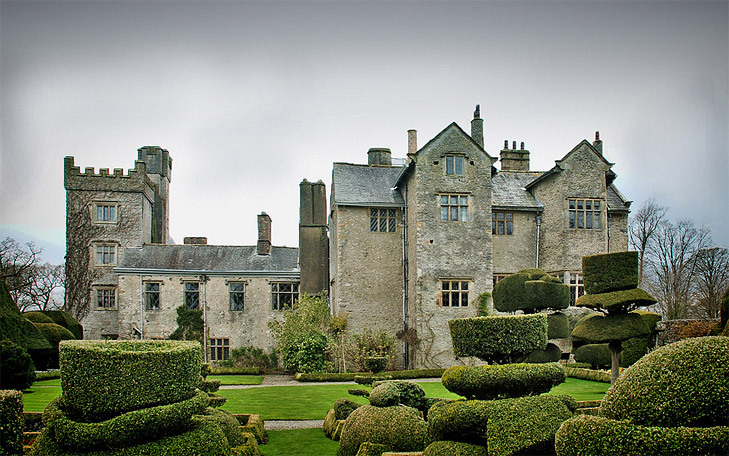
The fashion for more complicated topiary designs (in a Franco-Dutch style) spread to England around 1660 after having first been established in Holland. Levens Hall garden in Cumbria, England, is an example of a 17th century topiary garden, created by French gardener M. Beaumont in the 1690s. It is now recognised by the Guinness Book of Records as the oldest topiary garden in the world.
A satiric essay on “Verdant Sculpture” published by Alexander Pope in The Guardian in 1713 blew topiary out of fashion through mocking descriptions of unfinished sculptures and deformed figures heavily affected by the weather. In the 1720s and 1730s hedges, mazes, and topiary were cleared from aristocratic English gardens by prominent designers such as William Kent and Charles Bridgeman in favour of wilder, more natural-looking gardens. Topiary continued on a far smaller scale in cottage gardens, where traditional forms such as balls, cones, and the occasional peacock made impressive centre-pieces.
In the 1840s, the botanist and garden writer John Loudon expressed a sense of loss due to the removal of topiary from English gardens, and in the 1850s the grounds of Elvaston Castle in Derbyshire opened to public viewing, creating a sensation through its enclosed garden ‘rooms’ and gothic style. Within a few years architectural topiary was again back in fashion, followed by sculptural topiary in the 1870s. Popular gardening writer James Shirley Hibberd helped re-kindle England’s enthusiasm for topiary during the 1870s, by describing a plant sculpture as an expression of out ingenuity. English cottage-style gardens continued to be popular in the late 19th century, with the revival of topiary among roses and mixed herbaceous borders. Great Dixter house in Sussex is regarded as the epitome of English plantsmanship, sporting this stylised mix of topiary and ‘cottagey’ plantings.
In the mid-1900s topiarists began creating portable pieces - the new topiary - made of fast-growing, easily moulded plants trained over frames. The frame remains as a permanent trimming guide, and can be stuffed with moss then planted, or placed around pre-existing shrubbery. This style was first introduced to Disneyland in America, where cartoon characters were created in topiary-form to capture the imagination of visitors to the park.
The appreciation of portable topiary and mosaiculture (multiple types and styles of planting to create a mosaic-like, living sculpture) has continued to the present day, with impressive examples such as the 2008 Summer Olympics in China, and entries of modern topiary art to the Philadelphia Flower Show each year. Interest in the revival of historic gardens has led to traditional topiary being re-planted and maintained for the public to enjoy; an example of this is the parterre garden at the Château de Villandry, France.
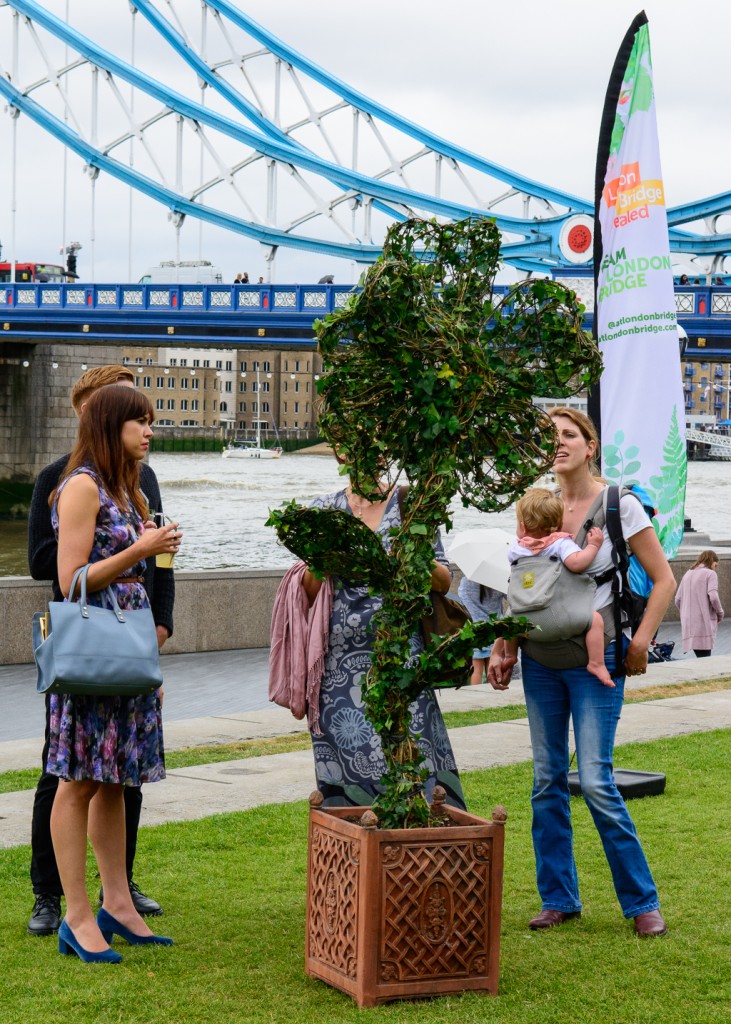
Agrumi's topiary has shown up on high streets and shopping centres across the UK and Europe.
Birmingham city centre came alive with topiary dinosaurs in the summer of 2018. The local BID capitalized on a visit from the Natural History Museum’s famous Diplodocus skeleton by decking out their shopping district with fantastic mini beasts made by us.
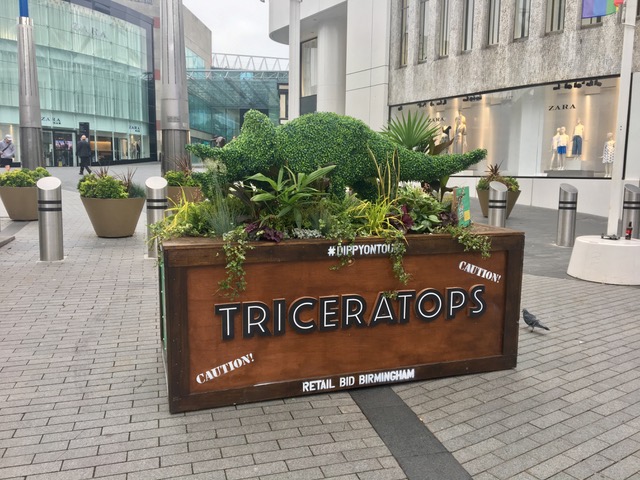
Children and adults were enchanted. All manner of dinosaur-related creative, engaging PR events ensued bringing more visitors and money into the shopping district. Twitter, Facebook and Instagram were used to generate a buzz and the excitement grew with each re-tweet and ‘like’.
And in the summer of 2019 Hatton Garden, the centre of the UK diamond trade and has the country's largest cluster of jewellery retailers, celebrated this fact with a giant topiary ring.

The ring is over 3m tall so you can walk right through it, or pose and take a photo. It made an impact on the street and across social media where many photos were shared of couples, children and even dogs standing in the ring.


The Agrumi design team loves a challenge. Contact us or call on 01590 683487 to talk about enhancing your town and helping your businesses to thrive.
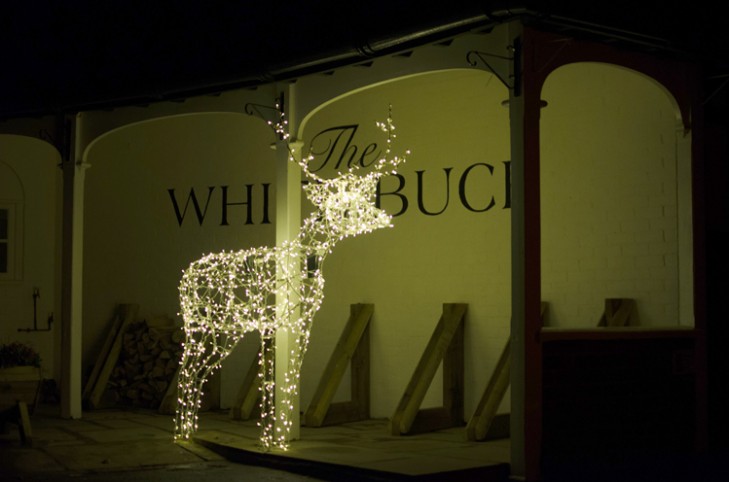
Sometimes customers want something a bit different to brighten up their designs with; therefore, we offer a fantastic alternative sculpture covering in the form of LED lights. This combination of LED lights and our wire frame sculptures creates a beautiful effect that will joyfully light up the night!
Last Christmas Agrumi got into the festive spirit by covering one of our wire topiary deer frames in 1000 twinkly LED lights. The work took no more than a morning and the results were fantastic. ‘Rudolf’ was stationed outside our local pub in the New Forest, ‘The White Buck’ and helped raise funds for Greenfingers, the charity that creates magical gardens for children’s hospices.
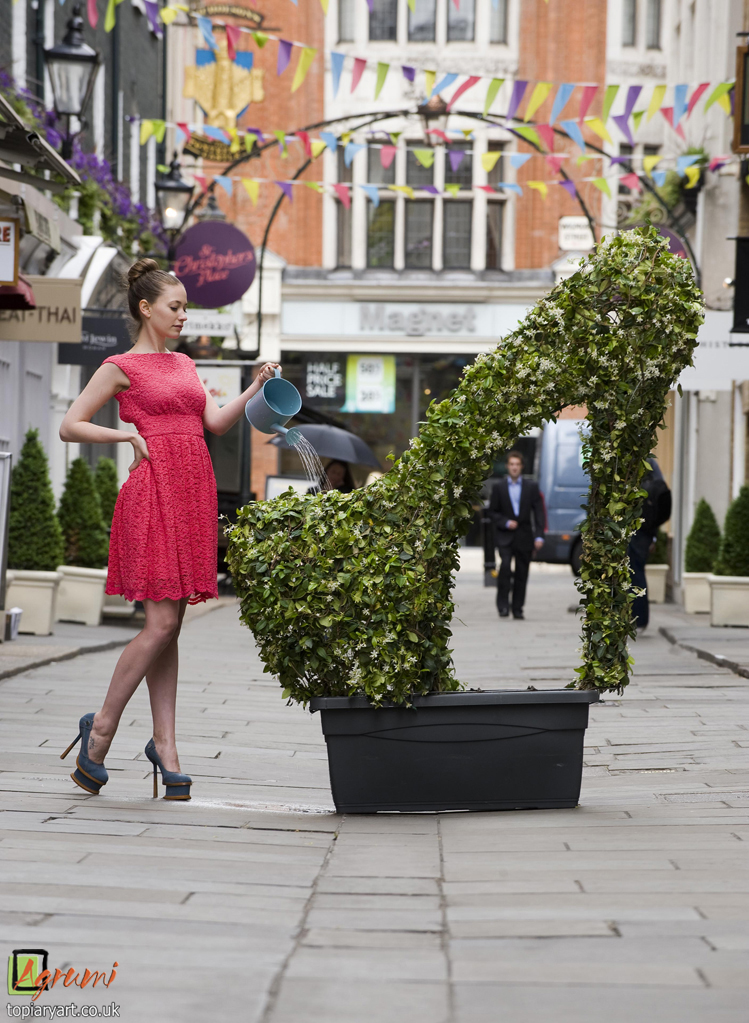
Following on from the success of our topiary stiletto covered in Star Jasmine, made to mark a fashion event at St Christopher's Place off London's Oxford Street, we were later commissioned again to produce an updated replacement of the existing stiletto design, but this time covered in beautiful, twinkling, LED lights; ordered just in time for Christmas it was the perfect way to get shoppers into the festive spirit.
Agrumi can design, make and deliver commissions like this within a few days ; do you have an idea for something you want created in LED lighting for an evening event, advertisement or just to brighten up the night? Give us a call and we'll see what we can do!